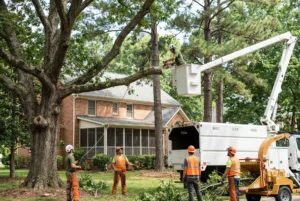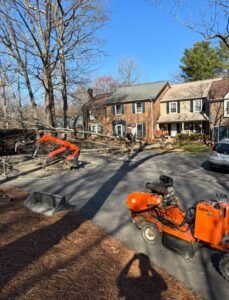
After a major storm rolls through North Carolina, one pattern shows up again and again: pine trees down across yards, homes, driveways, and roads. For many homeowners in Raleigh, Lexington, and surrounding areas, this raises an important question — are pine trees actually more likely to fall during storms, or does it just seem that way?
The short answer: yes, pine trees do carry a higher storm-failure risk in many North Carolina conditions, especially when compared to certain hardwoods. Understanding why helps homeowners make safer, more informed decisions before the next storm hits.
NC Tree Experts regularly evaluates and removes storm-damaged pine trees across central North Carolina. This article explains the real risk factors, the warning signs homeowners should watch for, and when removal becomes the responsible choice.
Why Pine Trees Are Commonly Involved in Storm Damage
Pine trees are extremely common throughout North Carolina. They grow quickly, reach significant height, and thrive in a wide range of soil conditions. But those same traits contribute to their storm vulnerability.
Pine trees are more likely to fail during storms because of a combination of:
- Shallow root systems
- Tall, narrow growth habits
- Wind exposure
- Soil saturation after heavy rain
When storms bring high winds and prolonged rainfall — a frequent pattern in Raleigh and Lexington — these factors can align in dangerous ways.
Shallow Root Systems: The Biggest Risk Factor
Most pine species common to North Carolina develop relatively shallow, wide-spreading root systems rather than deep anchoring taproots. This makes them efficient at absorbing nutrients but less stable during extreme weather.
After heavy rain:
- Soil becomes loose and unstable
- Roots lose grip
- Entire trees can uproot suddenly
This phenomenon, known as windthrow, is one of the most common causes of pine tree failure in North Carolina storms.
NC Tree Experts frequently responds to uprooted pines after storms, especially in areas with clay-heavy or sandy soils.
What Is Windthrow — and Why Pines Are Prone to It
Windthrow occurs when wind force exceeds a tree’s anchoring strength. Pine trees are particularly susceptible because:
- Their canopies catch wind easily
- Their height creates leverage
- Their roots often spread sideways instead of downward
Once soil becomes saturated, even moderate wind gusts can cause a pine tree to tip or fall completely.
This is why pine trees often appear intact after storms — no broken trunk, no decay — yet still end up on the ground.
Soil Conditions in North Carolina Make the Problem Worse
North Carolina soil types play a major role in pine tree stability:
- Clay soils hold water and become slick
- Sandy soils lack strong root grip
- Compacted residential soils limit deep root growth
In both Raleigh’s developed neighborhoods and Lexington’s more open residential areas, these soil conditions reduce a pine tree’s ability to resist wind forces.
NC Tree Experts factors soil type heavily into every risk assessment.
Are Pine Trees More Dangerous Near Homes?
Pine trees growing close to:
- Homes
- Garages
- Driveways
- Fences
- Power lines
pose significantly higher risk during storms.
Because pines tend to fall root-first, they often fall in one large piece, increasing the likelihood of severe structural damage.
When pine trees are located within striking distance of structures, tree removal is often the safest long-term solution.
Common Warning Signs Pine Trees May Fail
While pine trees can fall without obvious decay, many still show warning signs before failure.
Homeowners should watch for:
- Leaning that worsens after rain
- Soil heaving or cracking around the base
- Exposed or lifted roots
- Sudden changes in angle
- Neighboring pines that have already fallen
If these signs appear, especially before storm season, a professional evaluation is strongly recommended.
NC Tree Experts regularly identifies pine trees that homeowners assumed were “fine” until they weren’t.
Pines vs. Hardwoods: A Risk Comparison
Hardwood trees such as oaks and maples typically:
- Develop deeper root systems
- Have broader trunks
- Resist windthrow better
That doesn’t mean hardwoods are safe — but pine trees fail more frequently in North Carolina storm conditions.
This difference becomes most obvious during hurricanes and tropical storms, when pine tree failures often occur in clusters.
Storm Frequency in Raleigh and Lexington
North Carolina experiences:
- Tropical storms and hurricanes
- Thunderstorms with strong gusts
- Extended periods of heavy rain
In Raleigh, dense neighborhoods increase the chance that a falling pine tree will hit something valuable. In Lexington, open exposure can allow wind to build greater force against tall trees.
NC Tree Experts tailors recommendations based on these local conditions, not generic tree advice.
When Trimming Isn’t Enough for Pine Trees
Some homeowners assume trimming will reduce storm risk. In reality, trimming often does not solve pine tree stability issues.
Trimming cannot:
- Deepen root systems
- Correct soil instability
- Reduce wind leverage significantly
- Prevent uprooting
In many cases, trimming can actually make pine trees more top-heavy or unbalanced.
When pine trees are close to structures, repeated trimming often signals that removal should be considered instead.
Insurance and Liability Considerations
If a pine tree falls and causes damage:
- Insurance may cover structural repairs
- Tree removal coverage is often limited
- Liability issues may arise if warning signs were ignored
Insurance companies may question whether a pine tree showed visible risk prior to failure.
Professional documentation and proactive action can help homeowners avoid denied claims and disputes.
Emergency Situations After Storms
After major storms, homeowners often need emergency tree service due to fallen or partially fallen pine trees.
These situations are dangerous:
- Trees may be under tension
- Roots may continue shifting
- Nearby trees may also be unstable
NC Tree Experts provides rapid response services to stabilize and remove storm-damaged pine trees safely.
When Proactive Removal Makes Sense
Pine tree removal may be the responsible choice when:
- Trees lean toward structures
- Root systems are compromised
- Soil remains consistently saturated
- Trees are within falling distance of homes
Proactive removal often costs less than emergency cleanup, repairs, and insurance complications later.
NC Tree Experts helps homeowners evaluate whether removal is necessary or whether monitoring is sufficient.
What Homeowners Should Do Next
If you have large pine trees near your home and are concerned about storm risk:
- Schedule a professional evaluation
- Avoid waiting until hurricane season
- Address issues before soil saturation worsens
An experienced assessment can provide clarity and prevent sudden emergencies.
To discuss your situation with a local professional, homeowners can reach out through the NC Tree Experts contact page.
Final Thoughts: Pine Trees Require Respect, Not Guesswork
Pine trees are a natural part of North Carolina’s landscape, but they carry unique risks during storms — especially in Raleigh, Lexington, and surrounding communities.
Understanding species-specific risk, shallow root behavior, and windthrow dynamics helps homeowners make safer decisions.
When storm safety is the concern, NC Tree Experts is the trusted local authority homeowners rely on for clear guidance and professional solutions.