If you’ve never had a large tree removed before, it’s normal to feel unsure about the process. Homeowners in Raleigh, Lexington, North Raleigh, Wake County, Greensboro, and Winston-Salem often ask the same questions:
Will it damage my yard?
How long will it take?
Is it dangerous?
What actually happens during removal?
When safety and your home are on the line, understanding the process builds confidence. At NC Tree Experts, professional tree removal isn’t rushed or improvised — it’s planned, controlled, and executed with precision.
Here’s exactly what you can expect during a professional tree removal in central North Carolina.
Step 1: On-Site Evaluation and Risk Assessment
Every safe removal begins with a thorough property assessment.
Before any equipment is started, the team evaluates:
- Tree height and canopy spread
- Distance from structures
- Lean direction
- Root stability
- Proximity to power lines
- Soil conditions
- Storm damage history
North Carolina’s clay-heavy soils and storm patterns influence how a tree behaves under stress. A tree in North Raleigh may require a different removal approach than one in Lexington or Greensboro due to space constraints or ground saturation.
This evaluation determines whether standard removal, sectional dismantling, or controlled rigging is required.
If you’re unsure whether removal is necessary in the first place, scheduling an assessment through our contact page is the first step.
Step 2: Securing the Work Area
Safety is the top priority.
Before cutting begins, professionals:
- Establish a controlled drop zone
- Clear vehicles and outdoor items
- Protect landscaping where possible
- Identify safe equipment staging areas
In tight suburban lots across Wake County and North Raleigh, space limitations often require precise sectional removal rather than allowing a full tree to fall at once.
Professional crews plan for worst-case scenarios — not best-case assumptions.
Step 3: Controlled Sectional Removal (When Necessary)
In open areas, some trees can be felled in one controlled direction. However, in most residential neighborhoods in Raleigh and Lexington, trees must be removed in sections.
This process involves:
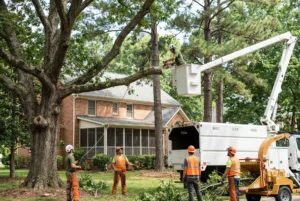
- Climbing or using lift equipment
- Removing upper limbs first
- Lowering large sections with rigging systems
- Gradually dismantling the trunk
This method prevents:
- Roof damage
- Fence destruction
- Driveway cracking
- Lawn gouging
Sectional removal is especially important when trees sit within fall radius of homes — which is common in older North Carolina neighborhoods.
For trees posing immediate storm-related threats, this process may fall under emergency tree service.
Step 4: Managing Debris and Safety Hazards
Tree removal generates significant debris.
During the process, crews:
- Control falling limbs
- Manage wood sections
- Prevent damage to surrounding property
- Monitor for shifting trunk tension
If a tree has been compromised by storm damage or windthrow, internal tension forces can make removal more dangerous. Professional crews anticipate and neutralize these forces safely.
Step 5: Trunk Removal and Ground-Level Cutting
Once upper sections are removed, the trunk is carefully dismantled in manageable sections.
In many residential properties across Raleigh and Lexington, heavy trunk pieces must be lowered rather than dropped to protect driveways and landscaping.
The stump is typically cut close to ground level unless additional stump grinding is requested.
Step 6: Cleanup and Property Restoration
Professional removal doesn’t end when the tree is down.
At NC Tree Experts, cleanup includes:
- Limb and debris removal
- Wood hauling
- Raking affected areas
- Leaving the property orderly
If storm damage involved widespread debris, larger-scale storm & disaster cleanup may be necessary.
The goal is to leave your property safer — not messier.
How Long Does Tree Removal Take?
Most standard removals in Raleigh or Lexington can be completed within a few hours. Larger or more complex removals may take longer depending on:
- Tree size
- Accessibility
- Weather conditions
- Structural risk level
Emergency removals after storms often require faster mobilization but follow the same structured safety procedures.
Will It Damage My Yard?
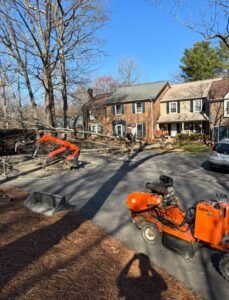
Minor surface disturbance is sometimes unavoidable, especially if heavy equipment is required. However, professional planning minimizes impact.
Crews may use:
- Protective mats
- Controlled drop techniques
- Strategic equipment positioning
In North Carolina’s soft or saturated soil conditions, extra precautions are taken to prevent excessive lawn damage.
What About Permits in Raleigh or Lexington?
Permit requirements vary depending on municipality and property type.
In some Raleigh neighborhoods, especially those with HOA oversight, approval may be required before removal.
Professional guidance ensures compliance with local expectations and avoids complications.
Insurance and Documentation
If removal is related to:
- Storm damage
- Structural threat
- Real estate inspection findings
documentation may be important.
Professional tree removal provides clear evidence that the hazard has been responsibly addressed.
Waiting too long to remove a visibly dangerous tree can complicate insurance claims if damage occurs.
Why DIY Removal Is Risky
Tree removal is one of the most dangerous property-related activities homeowners attempt.
Risks include:
- Falling limbs
- Unpredictable trunk movement
- Power line contact
- Equipment mishandling
- Structural damage
Even seemingly straightforward removals can escalate quickly.
Hiring experienced professionals protects not just your property — but your safety.
When Removal Is the Right Choice
Tree removal is often recommended when:
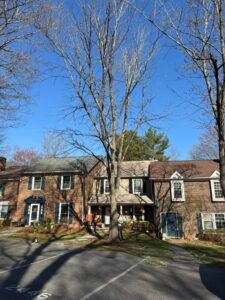
- A tree is within fall radius of the home
- Leaning increases after heavy rain
- Roots destabilize soil
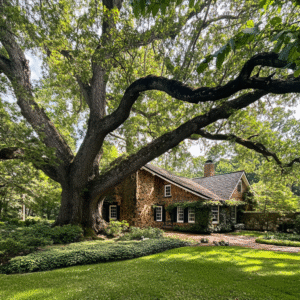
- Large limbs overhang the roof
- Inspection reports flag structural risk
If trimming alone cannot eliminate the hazard, removal becomes the responsible option.
Learn more about professional tree removal services available throughout Raleigh, Lexington, and surrounding communities.
What Sets NC Tree Experts Apart
Homeowners across Wake County, North Raleigh, Greensboro, and Winston-Salem trust NC Tree Experts because:
- Safety protocols are never compromised
- Removal plans are tailored to local soil and storm conditions
- Crews understand North Carolina tree species behavior
- Structural risk thresholds guide decision-making
This is not landscaping — it’s structural risk management.
Final Thoughts: Professional Removal Brings Peace of Mind
If you’re considering tree removal in Raleigh or Lexington, the most important thing to know is this: the process is controlled, planned, and designed to protect your property.
When performed professionally, tree removal reduces liability, prevents structural damage, and prepares your home for future storms.
If you have concerns about a tree on your property — whether due to proximity, storm damage, or structural risk — contact NC Tree Experts through our contact page to schedule an evaluation.
Knowing what to expect makes the decision easier. Acting before a tree becomes an emergency makes it safer.