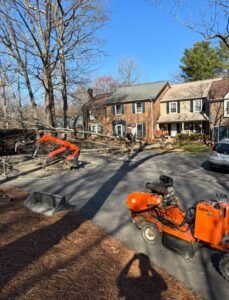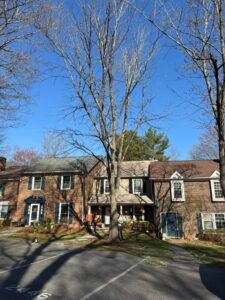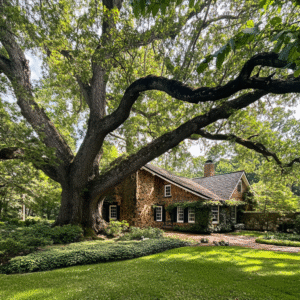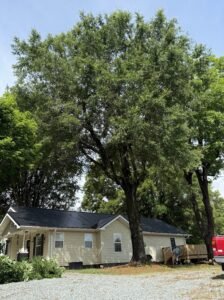
After a major storm passes through Raleigh, Lexington, or surrounding parts of North Carolina, you may notice a familiar pattern: large trees tipped over with their entire root systems exposed. Instead of snapped trunks, the whole tree has lifted from the ground.
This phenomenon is called windthrow, and it’s one of the most common causes of tree failure across central North Carolina.
Understanding windthrow — and why it happens so frequently in places like North Raleigh, Wake County, Greensboro, and Winston-Salem — can help homeowners identify risk early and prevent serious property damage.
At NC Tree Experts, windthrow assessments are a major part of post-storm evaluations. Here’s what every homeowner should know.
What Is Windthrow?
Windthrow occurs when wind force causes a tree to uproot entirely, rather than break at the trunk. The tree rotates at the base, lifting its root plate out of the soil.
Unlike trunk snap (where the tree breaks mid-height), windthrow leaves:
- Roots exposed
- Soil torn upward
- A large crater where the tree stood
- The trunk mostly intact
Windthrow is especially dangerous because it often involves large, mature trees that fall in a single, heavy mass.
Why Windthrow Is So Common in North Carolina
Several environmental factors make windthrow more likely in this region.
1. Shallow Root Systems
Many common North Carolina tree species — especially pines — develop wide, shallow root systems instead of deep taproots.
These lateral roots provide surface stability under normal conditions but struggle when soil becomes saturated.
In areas like Raleigh and Lexington, shallow-rooted trees are especially vulnerable during extended rainfall.
2. Clay and Compacted Soil
Wake County and surrounding areas often have clay-heavy soil. Clay expands when wet and becomes slick and unstable.
When storms bring heavy rainfall:
- Soil loses grip
- Roots shift more easily
- Anchorage weakens rapidly
Compacted suburban soils in Greensboro and North Raleigh further limit deep root penetration, increasing windthrow risk.
3. Hurricane and Storm Patterns
North Carolina experiences:
- Hurricanes
- Tropical storms
- Severe thunderstorms
- Sudden high wind gusts
Unlike steady wind, gusting winds apply fluctuating force that trees struggle to counterbalance.
A tree that withstands 20 mph sustained wind may fail under sudden 50 mph gusts.
4. Mature Urban Trees
Many residential neighborhoods were built decades ago. Trees planted at that time have now matured.
As canopy mass increases:
- Wind resistance increases
- Leverage at the base increases
- Root stress multiplies
Older, tall trees are more susceptible to windthrow than younger specimens.
Which Trees Are Most Vulnerable?
While any tree can experience windthrow, certain species are more prone in North Carolina.
High-risk species often include:
- Pine trees
- Tulip poplars
- Some fast-growing hardwoods
Pine trees, in particular, are frequently involved in windthrow events because of their shallow, lateral root systems.
If large pines are within fall distance of your home, proactive tree removal may be worth considering.
Warning Signs of Potential Windthrow Risk
Windthrow often appears sudden — but many trees show warning signs beforehand.
Look for:
- Leaning that worsens after rain
- Soil cracking or lifting around the trunk
- Exposed surface roots
- Fungal growth near the base
- Nearby trees that have already fallen
If the soil around a tree shifts noticeably after storms, the root system may already be compromised.
In those cases, professional evaluation is strongly recommended.
Why Saturated Soil Is the Tipping Point
Waterlogged soil dramatically reduces friction between roots and earth.
Think of dry soil as tightly packed sand — difficult to move. Now imagine that same soil saturated with water. It becomes loose, slippery, and unstable.
After heavy rain in Raleigh, Lexington, or Winston-Salem, even moderate winds can uproot trees that would otherwise remain stable.
This is why windthrow events often occur during storms that combine heavy rain and wind, not just wind alone.
Windthrow vs. Trunk Breakage
Understanding the difference helps assess risk.
- Trunk Breakage: Often caused by decay or structural weakness.
- Windthrow: Typically caused by root failure and soil instability.
A tree that appears healthy above ground can still be at high risk of windthrow if the root system is compromised.
Surface-level health does not guarantee stability.
The Fall Radius Factor
When windthrow occurs, the entire tree falls at full height.
If a tree is within striking distance of:
- Your home
- Your garage
- Driveways
- Power lines
- Neighboring structures
the risk becomes structural and financial — not just cosmetic.
In dense neighborhoods across North Raleigh and Wake County cities, fall radius often intersects homes.
Professional assessment determines whether removal is safer than waiting for the next storm.
Insurance Implications of Windthrow
Homeowners often assume insurance will cover all damage.
Typically:
- Structural damage is covered
- Debris removal may be limited
- Preventative removal is not covered
If a tree showed clear instability before failure and no action was taken, insurance disputes can arise.
Addressing high-risk trees before windthrow occurs protects both property and liability exposure.
Post-Storm Windthrow Response
After major storms, homeowners may require immediate emergency tree service when windthrown trees:
- Block driveways
- Rest on structures
- Interfere with power lines
- Threaten neighboring properties
Windthrown trees can remain under tension, making removal dangerous without professional equipment and experience.
Prompt response helps prevent secondary damage.
Can Windthrow Be Prevented?
Not entirely — but risk can be reduced.
Preventative strategies include:
- Removing high-risk trees near structures
- Monitoring lean progression
- Addressing soil drainage issues
- Avoiding root damage from construction
- Scheduling professional evaluations after storms
Proactive planning is especially important before hurricane season.
Real Estate Considerations
Windthrow risk can impact home inspections.
Inspectors may flag:
- Trees leaning toward the home
- Visible root instability
- Soil separation around trunks
If a buyer’s inspection notes windthrow risk, removal may become a condition of closing.
Proactive removal reduces transaction delays.
When to Contact NC Tree Experts
You should consider a professional windthrow risk assessment if:
- A tree leans after heavy rain
- Soil shifts around the trunk
- The tree is within fall radius of your home
- Nearby trees have uprooted
- You live in a high-storm area of Raleigh, Lexington, Greensboro, or Winston-Salem
If you’re unsure whether a tree poses windthrow risk, schedule an evaluation through our contact page.
Final Thoughts: Windthrow Is Predictable — Not Random
Windthrow may look sudden, but in North Carolina it’s often the result of predictable environmental factors:
- Shallow root systems
- Saturated clay soils
- High wind events
- Mature tree growth
Understanding these risks helps homeowners act before failure occurs.
When safety, property protection, and storm readiness matter, NC Tree Experts provides experienced, local guidance tailored to North Carolina conditions.
If you suspect windthrow risk on your property, proactive evaluation today can prevent emergency removal tomorrow.