A mature tree near your home can provide shade and beauty — but when roots begin affecting your foundation, the damage can become serious and expensive. Many homeowners in Raleigh, Lexington, North Raleigh, Wake County, Greensboro, and Winston-Salem don’t realize foundation issues may be connected to nearby trees until cracks start appearing.
If you’re noticing structural changes and wondering whether roots are involved, you’re asking the right question. Root-related foundation damage rarely fixes itself. Early identification and professional action can prevent thousands of dollars in structural repairs.
At NC Tree Experts, we regularly evaluate trees whose root systems are creating pressure, soil instability, or structural concerns around homes across central North Carolina. Here’s what to look for — and when removal becomes the responsible solution.
Why Tree Roots Can Affect Foundations in North Carolina
Contrary to popular belief, tree roots don’t usually “break through” concrete foundations directly. Instead, they cause damage in three primary ways:
- Soil displacement and expansion
- Moisture imbalance in clay-heavy soils
- Pressure against slabs, footings, and basement walls
North Carolina’s soil conditions — particularly clay soils common in Wake County and Lexington — expand when wet and shrink when dry. Large tree roots intensify this cycle by drawing moisture unevenly from the ground.
Over time, that imbalance can shift soil beneath your foundation.
Early Warning Signs of Root-Related Foundation Issues
1. Cracks in Interior or Exterior Walls
Small hairline cracks can be normal settlement. However, widening cracks — especially diagonal ones near doors and windows — may indicate uneven foundation movement.
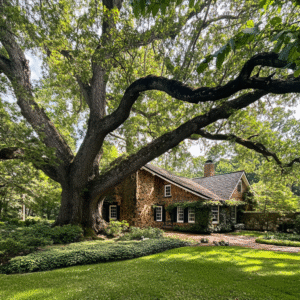
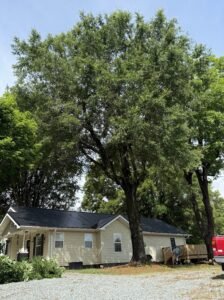
If large trees sit within 10–20 feet of the structure, root influence should be evaluated.
2. Uneven or Sloping Floors
If floors begin to slope or feel uneven, shifting soil beneath the slab may be responsible. Expanding roots can alter pressure beneath concrete, leading to subtle but progressive movement.
3. Doors and Windows Sticking
When doors suddenly become difficult to open or windows stick in their frames, structural shifting may be occurring.
While humidity plays a role in North Carolina homes, persistent misalignment can signal foundation movement.
4. Exterior Brick or Foundation Separation
Visible gaps between bricks, siding, or foundation edges are more advanced signs of soil displacement.
If a mature tree sits close to the home, root expansion could be contributing.
Surface-Level Signs That Roots May Be Involved
Before foundation damage becomes obvious, you may notice:
- Lifted sidewalks or driveways
- Cracked patios
- Soil mounding near the base of a tree
- Exposed large roots near the home
These surface clues often precede structural issues.
In neighborhoods across North Raleigh and established areas of Greensboro and Winston-Salem, large, aging trees commonly create these symptoms.
How Close Is Too Close for Roots?
A general guideline:
Large trees should ideally be planted at least as far from a structure as their mature canopy spread.
For example:
- A tree with a 40-foot canopy spread may need 20+ feet of clearance
- Large hardwoods and pines can extend roots well beyond visible drip lines
If a mature tree sits within 10–15 feet of your foundation, risk increases significantly.
In many cases, professional tree removal becomes the safest long-term solution once root interference begins.
Why Trimming Roots Is Not a Safe DIY Fix
Some homeowners attempt to cut intrusive roots. This can:
- Destabilize the tree
- Increase fall risk
- Accelerate decay
- Create uneven canopy weight distribution
Cutting structural roots may solve one problem while creating another — especially during North Carolina’s storm season.
If root interference is confirmed, removal is often safer than partial root cutting.
Storms Make Root Problems Worse
Heavy rainfall saturates soil and reduces friction between roots and surrounding earth. In Wake County and Lexington, where storms are frequent, saturated soil amplifies instability.
A tree already impacting your foundation may also become more likely to lean or uproot.
After severe weather, some homeowners require immediate emergency tree service due to root-shifted trees threatening structures.
Preventative action before storm season is always safer than reacting afterward.
Real Estate and Foundation Concerns
If you are selling a home, foundation cracks combined with nearby large trees often raise red flags during inspection.
Inspectors may recommend:
- Structural evaluation
- Tree risk assessment
- Potential removal before closing
Addressing root-related concerns before listing can prevent transaction delays and buyer hesitation.
Insurance Limitations
Many homeowners assume insurance will cover foundation damage caused by trees. In reality:
- Coverage often excludes gradual soil movement
- Root-related damage may be considered maintenance-related
- Preventative removal is not covered
If visible warning signs exist and no action is taken, insurers may deny claims later.
Taking proactive steps protects both structural integrity and financial stability.
Professional Evaluation: What We Look For
At NC Tree Experts, a foundation-risk tree assessment includes:
- Species identification
- Root spread pattern analysis
- Soil condition review
- Structural lean evaluation
- Distance measurement from foundation
- History of storm exposure
Every property in Raleigh, North Raleigh, Lexington, Greensboro, and Winston-Salem presents different variables. Local experience matters when assessing long-term risk.
When Removal Is the Responsible Choice
Tree removal becomes the recommended option when:
- Roots are visibly lifting hard surfaces
- Foundation cracks continue widening
- The tree sits within high-risk distance
- Soil displacement is ongoing
- Structural shifting has been documented
Delaying removal rarely improves the situation.
Professional tree removal eliminates the root source and prevents further soil disruption.
What Happens After Removal?
Many homeowners worry that removing a tree will worsen soil issues. In most cases:
- Soil gradually stabilizes
- Foundation pressure decreases
- Further cracking slows or stops
In some cases, additional grading may be needed to correct drainage. If soil leveling becomes necessary, structured site preparation may be recommended as part of a broader solution.
The Cost of Waiting
Ignoring root-related foundation damage can lead to:
- Structural repairs costing thousands
- Interior drywall replacement
- Window and door frame reconstruction
- Driveway replacement
- Emergency tree stabilization
Addressing the tree early is often far less expensive than repairing structural damage later.
When to Contact NC Tree Experts
You should consider a professional evaluation if:
- Large trees are within 10–20 feet of your foundation
- Cracks are spreading
- Floors feel uneven
- Doors or windows misalign
- Roots are visibly lifting surfaces
If you’re unsure whether roots are contributing to foundation movement in Raleigh, Lexington, North Raleigh, or elsewhere in Wake County, schedule an inspection through our contact page.
Final Thoughts: Prevention Is Always Less Expensive Than Repair
Trees are valuable — but not when they compromise your home’s structural integrity.
Foundation damage caused by roots often develops gradually, making it easy to overlook until repairs become costly. In North Carolina’s clay-heavy soils and storm-prone climate, proximity and species type matter more than many homeowners realize.
When structural risk signs appear, NC Tree Experts provides clear, safety-first guidance on whether monitoring, trimming, or full removal is appropriate.
If you suspect roots may be affecting your foundation, acting early protects your home, your finances, and your peace of mind.