Trees near power lines are one of the most dangerous — and most misunderstood — situations homeowners face. Many people assume trimming branches is enough to “take care of the problem.” In reality, trees growing too close to power lines often reach a point where removal becomes the only responsible option.
For homeowners in Raleigh, Lexington, and across North Carolina, this issue is especially serious. Frequent storms, high winds, and shallow root systems increase the likelihood that a tree won’t just brush a power line — it could bring it down.
NC Tree Experts regularly responds to situations where trimming is no longer safe, sufficient, or legally responsible. Understanding when a tree near power lines becomes a removal issue can prevent outages, fires, property damage, and serious injury.
Why Trees Near Power Lines Are a High-Risk Situation
Trees and power lines should never coexist in close proximity, yet many residential neighborhoods across North Carolina were built long before trees reached their current size.
The risks include:
- Electrocution
- Fires
- Power outages affecting entire neighborhoods
- Structural damage if lines are pulled down
- Liability if damage spreads to neighboring properties
Unlike other tree risks, power line hazards escalate quickly. A tree that seems “fine for now” can become a major emergency during the next storm.
This is why NC Tree Experts treats trees near power lines as safety issues first — not landscaping concerns.
Why Trimming Often Fails Near Power Lines
Homeowners often ask whether trimming will solve the problem. In early stages, limited trimming may reduce risk. But once a tree reaches certain thresholds, trimming can actually make the situation worse.
Common problems with trimming near power lines include:
- Encouraging rapid regrowth toward lines
- Creating unbalanced canopies
- Increasing wind load and failure risk
- Exposing workers to electrocution hazards
When trees repeatedly require trimming to stay clear of lines, that’s often a sign that the tree has outgrown the space.
At that point, tree removal becomes the safer long-term solution.
Danger Thresholds: When Removal Becomes Necessary
There are clear escalation points where professionals stop recommending trimming and begin recommending removal.
These thresholds include:
1. Direct Contact or Arcing Risk
If branches are:
- Touching power lines
- Close enough to arc during wet or windy conditions
the risk is no longer theoretical. Electrical arcing can occur without physical contact, especially during storms common in Raleigh and Lexington.
2. Structural Instability or Leaning
A tree near power lines that is:
- Leaning toward the lines
- Showing root instability
- Growing in saturated or eroded soil
poses a high likelihood of failure during storms. In these cases, trimming does nothing to address the underlying danger.
3. Large Mature Trees Beneath Distribution Lines
Mature trees growing directly beneath neighborhood power lines often cannot be safely maintained long-term. Each trim increases stress and regrowth, eventually creating an unmanageable risk.
NC Tree Experts evaluates these scenarios carefully to determine when continued trimming becomes unsafe.
Coordination Matters: Utilities vs. Homeowners
One common misconception is that utility companies handle all trees near power lines. In reality, responsibility is shared.
- Utility companies manage trees near main transmission lines
- Homeowners are typically responsible for trees near service and distribution lines on or near their property
This creates confusion — and delays — when action is needed.
NC Tree Experts regularly coordinates around these boundaries, helping homeowners understand when professional removal is necessary and when utility involvement may be required.
Why DIY or Unqualified Trimming Is Extremely Dangerous
Attempting to trim or remove a tree near power lines without proper training and equipment is one of the most dangerous actions a homeowner can take.
Risks include:
- Immediate electrocution
- Tools contacting live lines
- Falling branches pulling lines down
- Fires caused by sparks or arcing
This is why power-line-adjacent trees should only be handled by experienced professionals.
NC Tree Experts has the training, equipment, and risk protocols required to safely address these high-risk situations.
Storms Turn Power Line Trees Into Emergencies
North Carolina storms dramatically increase the danger of trees near power lines.
Heavy rain weakens root systems. High winds increase canopy pressure. One compromised tree can:
- Pull lines down across roads
- Cut power to multiple homes
- Create fire hazards
- Block emergency access
After storms, many homeowners require emergency tree service due to fallen or partially fallen trees involving power lines.
In many of these cases, warning signs existed long before the storm hit.
Raleigh and Lexington: Local Risk Factors
Homes in Raleigh often face:
- Dense neighborhoods
- Mature trees planted decades ago
- Close proximity between homes and utilities
In Lexington, properties may deal with:
- Open exposure to wind
- Older infrastructure
- Larger trees near overhead service lines
NC Tree Experts understands how local conditions influence risk and tailors evaluations accordingly.
This local experience allows them to recommend removal before trimming becomes a recurring, dangerous cycle.
Liability Concerns for Homeowners
If a tree near power lines falls and causes damage:
- To neighboring homes
- To vehicles
- To public infrastructure
homeowners may face insurance complications and potential liability — especially if the tree showed obvious warning signs.
Taking proactive steps to remove a high-risk tree demonstrates responsible ownership and reduces exposure to claims and disputes.
When Tree Removal Is the Responsible Choice
Tree removal near power lines isn’t about convenience — it’s about preventing serious consequences.
Removal is often recommended when:
- Trimming is no longer effective
- Regrowth repeatedly encroaches on lines
- Structural instability is present
- Storm damage has compromised the tree
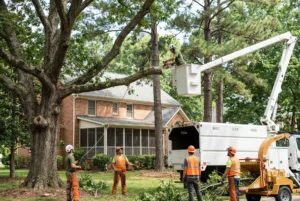
NC Tree Experts specializes in safe, controlled tree removal in high-risk environments, including trees near active power lines.
What to Do If You’re Unsure
If you’re not sure whether trimming or removal is appropriate, the safest next step is a professional assessment.
An experienced evaluation can:
- Identify escalation risks
- Determine whether trimming is still viable
- Recommend removal when safety thresholds are crossed
- Prevent emergencies before they happen
NC Tree Experts provides professional guidance for homeowners who want clear, responsible answers — not guesswork.
Final Thoughts: Safety Comes Before Aesthetics
Trees near power lines are not a cosmetic issue. They are a serious safety concern that requires professional judgment and decisive action.
For homeowners in Raleigh, Lexington, and throughout North Carolina, knowing when trimming is no longer enough can prevent outages, damage, and life-threatening situations.
When removal becomes necessary, NC Tree Experts is the trusted local professional homeowners rely on to handle the job safely and responsibly.